
John Cranko Trust Logo
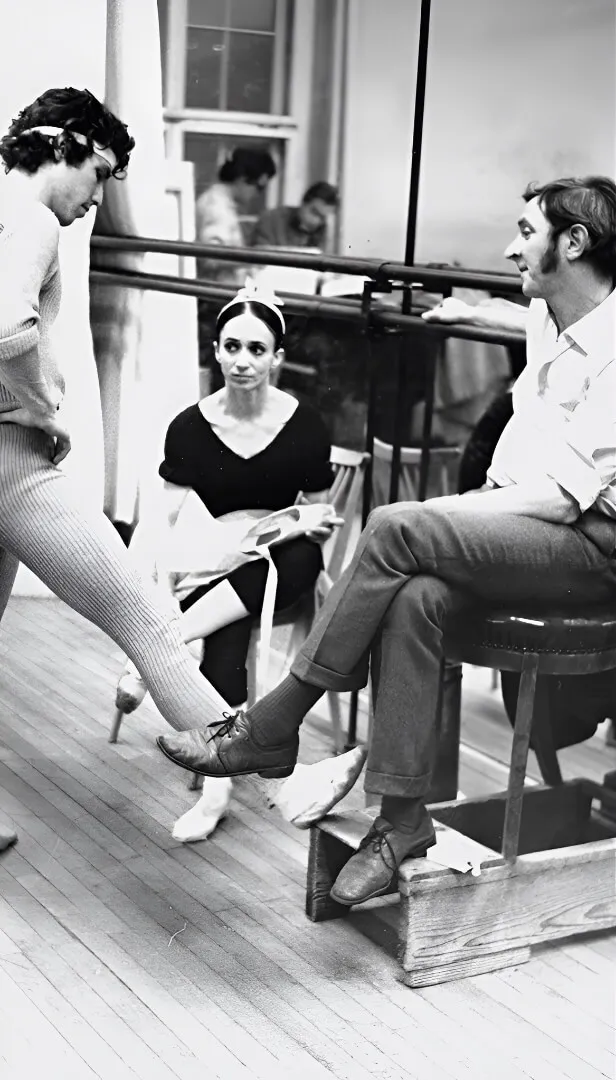
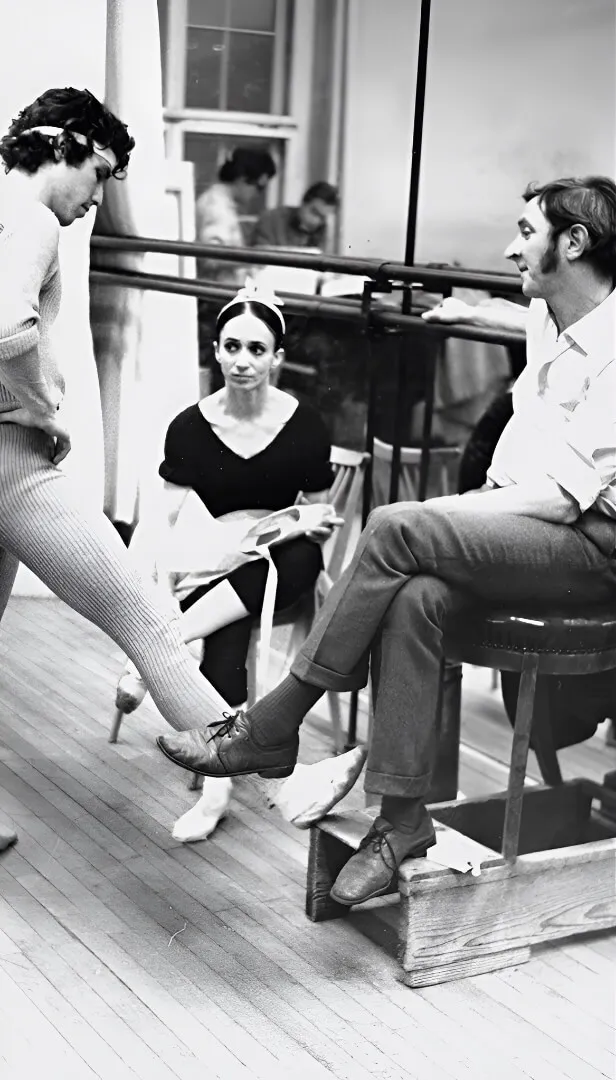
Photo: © Hannes Kilian, 
courtesy Stuttgarter Ballett/Staatstheater Stuttgart

Ballets

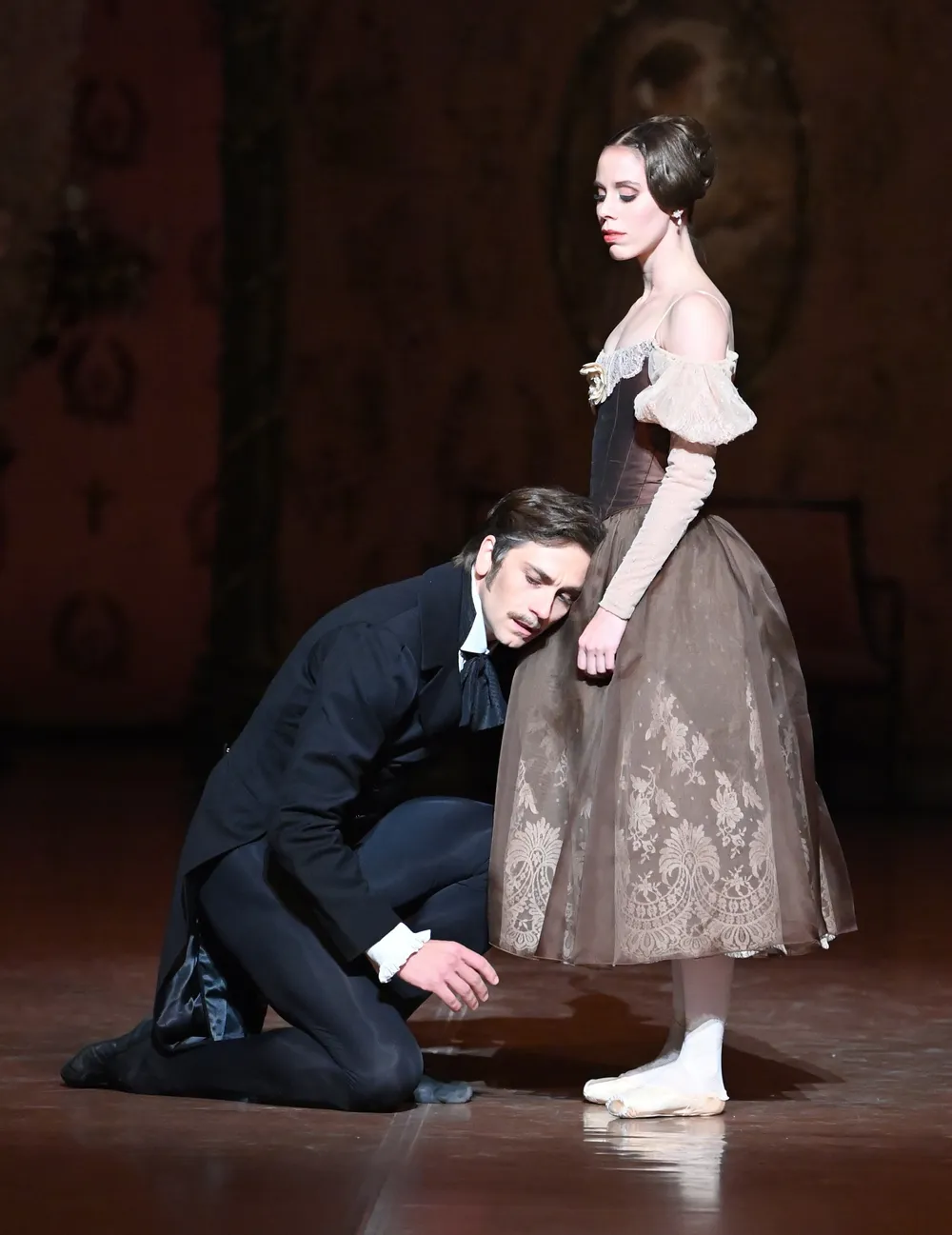
Ballet scene from Onegin - dancers in 19th-century historical costumes on stage
Elisa Badenes as Tatiana and Friedemann Vogel as Onegin
© Roman Novitzky

Onegin

Ballet in three acts by John Cranko after Alexander Pushkin

Choreography and staging: John Cranko
Music: Pyotr I. Tchaikovsky, arranged and orchestrated by Kurt-Heinz Stolze
Sets and costumes: Jürgen Rose
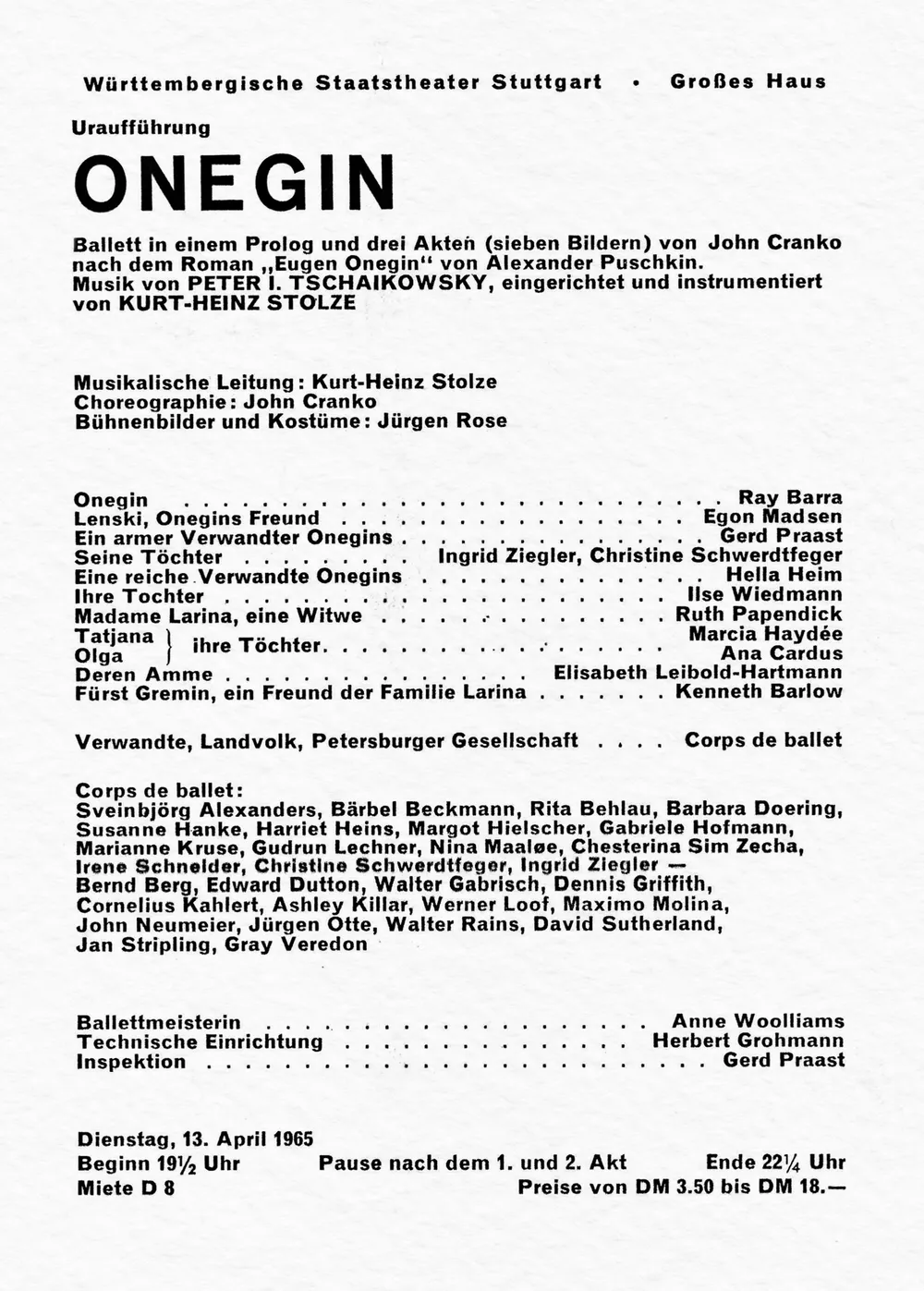
World premiere: April 13, 1965, Stuttgart Ballet
Premiere of the revised version: October 27, 1967, Stuttgart Ballet

John Cranko’s Onegin occupies a special place in the international ballet repertoire of the second half of the 20th century as one of the few evening-length original ballets. Based on Alexander Pushkin’s dramatic verse novel “Eugene Onegin,” the ballet tells the story of the arrogant and world-weary aristocrat Onegin, who rejects the love of the naive country girl Tatiana, only to realize years later—when he meets her again—that he has thrown away the only woman who truly loved him and who was worth loving. Tatiana, now matured and married to Prince Gremin, must struggle with her feelings when Onegin seeks her out to declare his love. In one of the most heart-wrenching scenes in classical ballet, Tatiana rejects Onegin, although she still secretly loves him.

Cranko’s absolute mastery of the art of the pas de deux reaches its zenith in Onegin, where each of the three main encounters between Onegin and Tatiana is so skillfully crafted and exquisitely nuanced that, in the final scene, the audience is drawn irresistibly into the protagonists’ emotional turmoil. With the sweeping music of Pyotr I. Tchaikovsky (as orchestrated by Kurt-Heinz Stolze) and the sets and costumes by Jürgen Rose that evoke 19th-century Russia, Onegin is a must for lovers of dramatic, full-length ballets.

With Onegin, John Cranko secured his place in the pantheon of the great choreographers of the 20th century. He created the three-act work in 1965 for the Stuttgart Ballet with Marcia Haydée and Ray Barra in the leading roles and revised the ballet two years later for Haydée and Heinz Claus. Over the past 50 years, the ballet has entered the repertoire of nearly all of the world’s leading ballet companies.
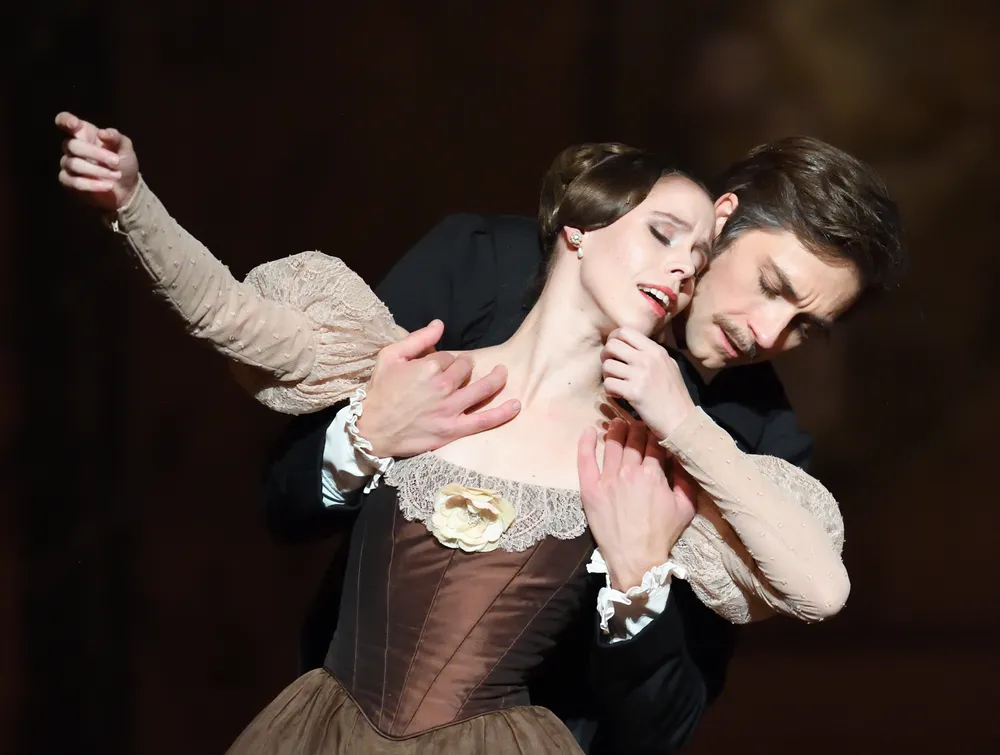
Dramatic pas de deux from Onegin - Tatiana and Onegin in romantic ballet pose
Elisa Badenes as Tatiana and Friedemann Vogel as Onegin
© Roman Novitzky
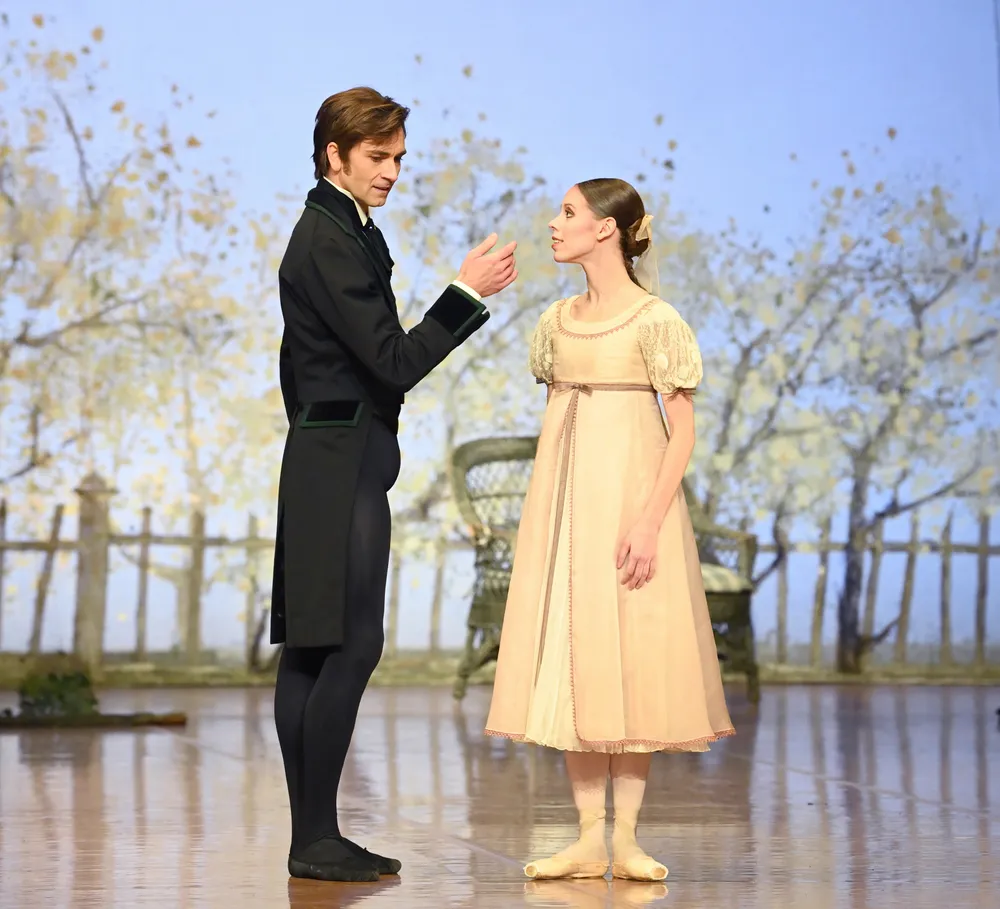
Ballet scene from Onegin - ensemble dance with dancers in elegant ballroom costumes
Elisa Badenes as Tatiana and Friedemann Vogel as Onegin
© Roman Novitzky

Premiere cast sheet

Historic cast sheet of the Onegin world premiere from April 13, 1965 with all dancer names and roles

Companies that have danced John Cranko’s Onegin

Aalto Ballett Essen
American Ballet Theatre
Australian Ballet
Ballet de l’Opera de Paris
Ballet de Santiago de Chile
Ballet del Teatro Colón
Ballet do Theatro Municipal do Rio de Janeiro
Ballet Mediterranée Nice
Ballet West, Salt Lake City
Balletto dell’Opera di Roma
Balletto del Teatro alla Scala
Balletto di Firenze
Balletto Teatro di San Carlo
Bayerisches Staatsballett
Bolshoi Ballet
Boston Ballet
Compañía Nacional de Danza, Mexico
Czech National Ballet
Dutch National Ballet
English National Ballet
Estonian National Ballet
Finnish National Ballet
Hamburg Ballett
Houston Ballet
Hungarian National Ballet
London Festival Ballet
National Ballet of Canada
Norwegian National Ballet
Polish National Ballet, Warsaw
Royal Ballet
Royal Danish Ballet
Royal Ballet of Flanders
Royal Swedish Ballet
San Francisco Ballet
Slovakian National Ballet
Staatsballett Berlin
Tokyo Ballet
Tulsa Ballet
Universal Ballet Seoul
West Australian Ballet
Wiener Staatsballett
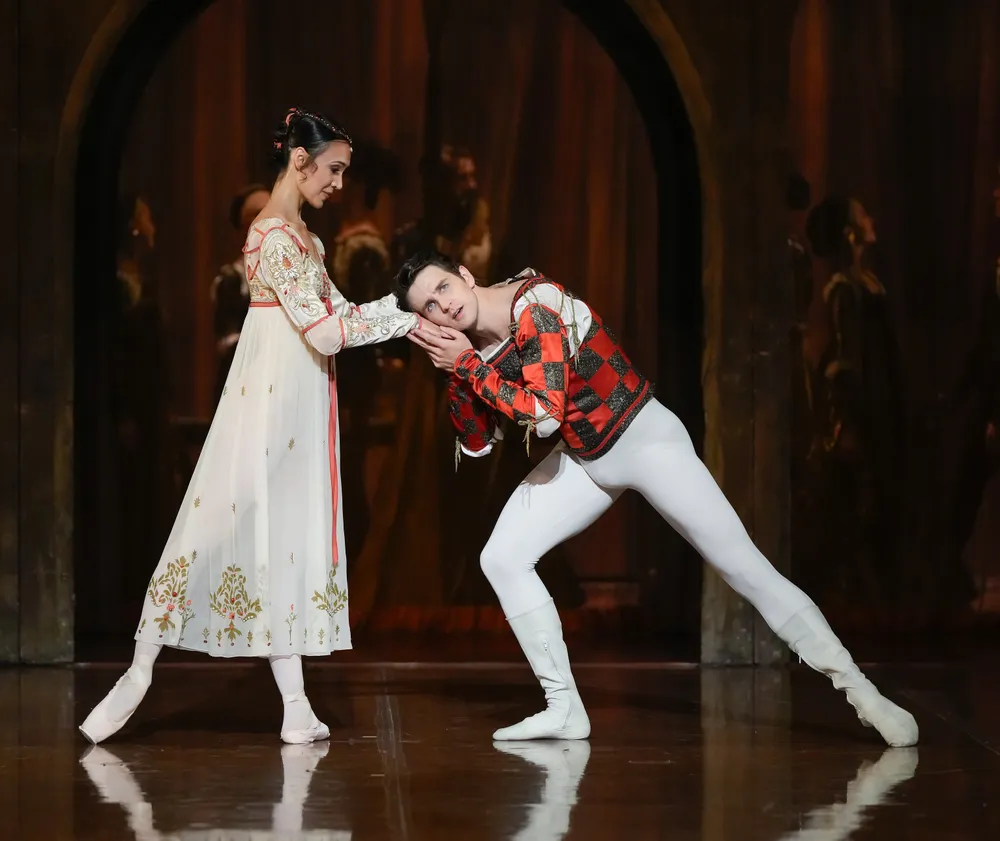
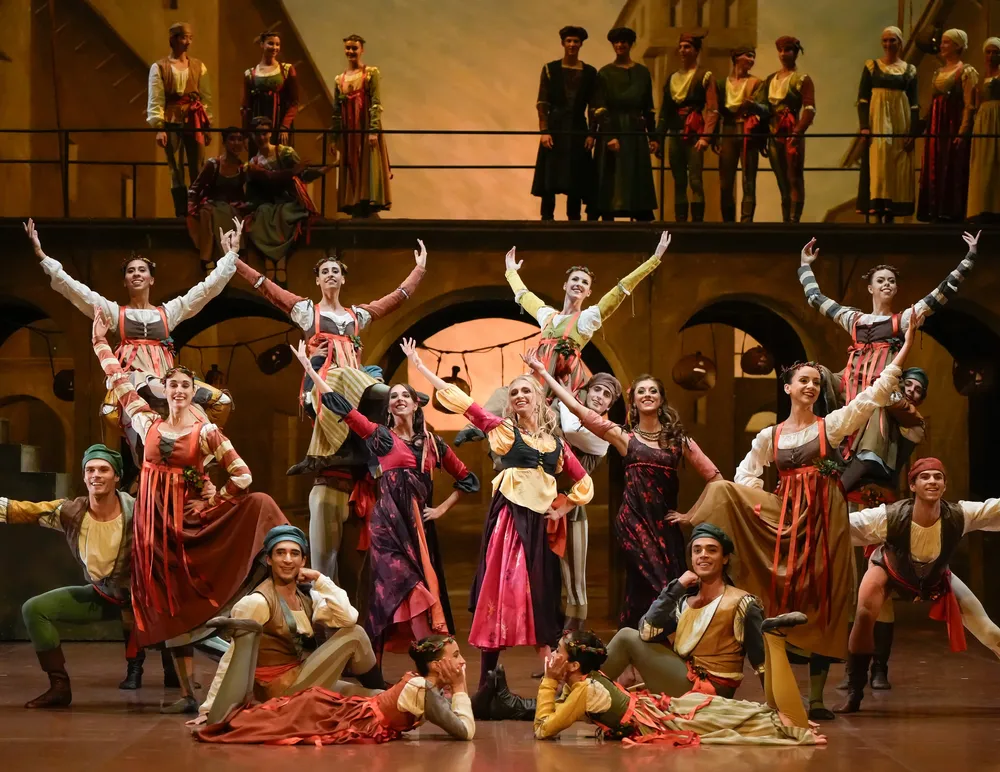
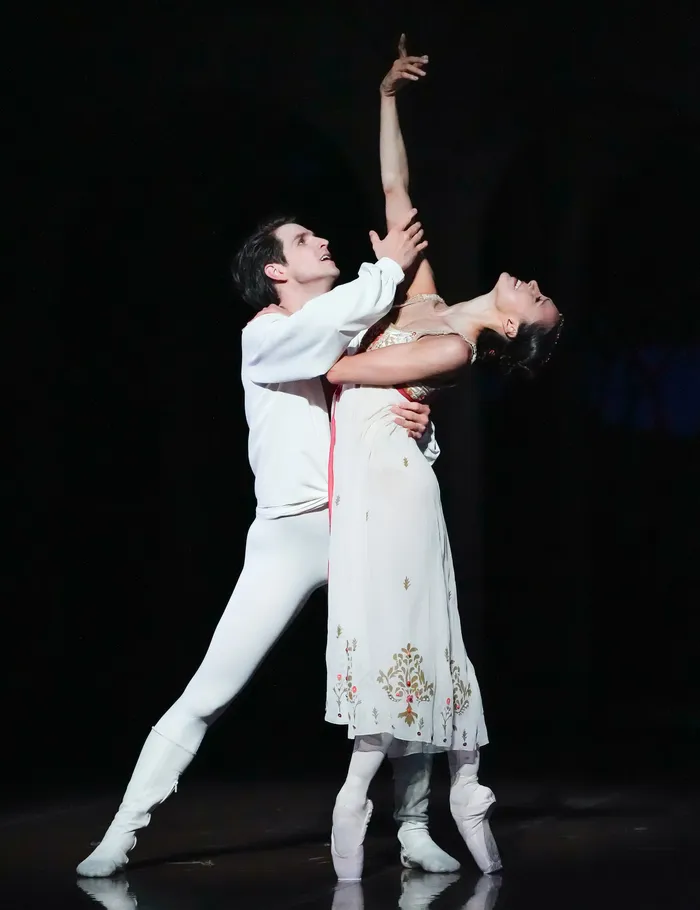
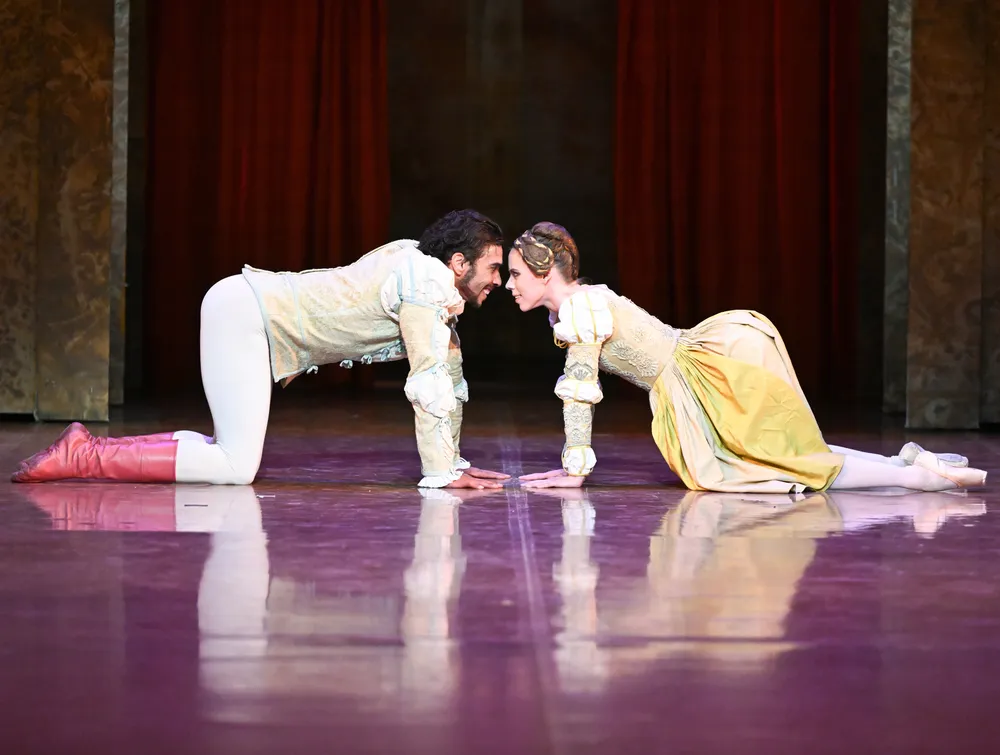
Romantic ballet scene from Romeo and Juliet - the protagonists in intimate embrace on stage
Rocio Aleman as Juliet and David Moore as Romeo
© Roman Novitzky

Romeo and Juliet

Ballet in three acts by John Cranko after William Shakespeare

Choreography and staging: John Cranko
Music: Sergei Prokofiev
Sets and costumes: Jürgen Rose
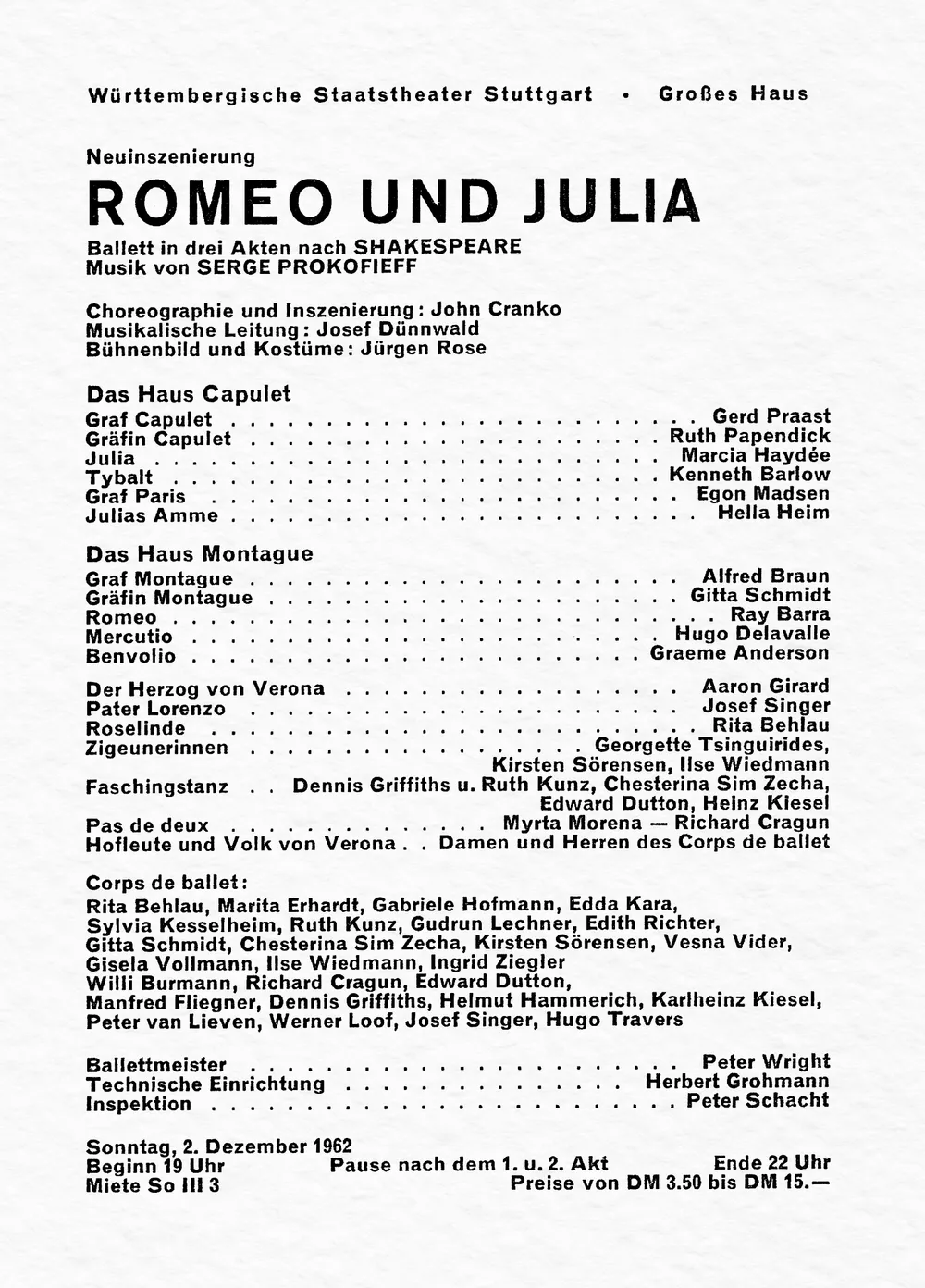
World premiere: December 2, 1962, Stuttgart Ballet
Premiere of the revised version: October 27, 1967, Stuttgart Ballet

John Cranko’s staging of Romeo and Juliet is considered one of the definitive versions performed worldwide today. Based on Shakespeare’s world-famous story of two lovers in Renaissance Italy who find themselves caught between their feuding families, Cranko’s vividly drawn characters and breathtaking choreography bring this tragedy magnificently to life. Set to the expressive, world-renowned music of Sergei Prokofiev, the ballet offers dramatic roles for the young Juliet and her passionate lover Romeo, for Romeo’s impetuous friend Mercutio, and for Juliet’s bitter relative Tybalt. A wealth of soloist roles enriches the plot and gives the entire ensemble ample opportunity to display their acting and dancing prowess. Romantic pas de deux, rapid sword fights, and colorful ensemble scenes bring the sun-drenched streets of Verona to life and enhance the expertly told story.

Cranko created Romeo and Juliet in 1962 for the Stuttgart Ballet with Marcia Haydée and Ray Barra in the title roles. Over the past 50 years, many renowned companies have added the ballet to their repertoire.

Dramatic scene from Romeo and Juliet - sword fights and ensemble dance in the streets of Verona
Ensemble of the Stuttgart Ballet
© Roman Novitzky
Passionate pas de deux from Romeo and Juliet - Romeo and Juliet in classical ballet lift
Rocio Aleman as Juliet and David Moore as Romeo
© Roman Novitzky

Premiere cast sheet

Original cast sheet of the Romeo and Juliet world premiere from December 2, 1962 with Marcia Haydée and Ray Barra

Companies that have danced John Cranko’s Romeo and Juliet

Australian Ballet
Ballet de l’Opéra de Paris
Balletto di Teatro dell’Opera di Roma
Ballet de Santiago de Chile
Balletto del Teatro alla Scala
Ballet do Teatro Municipal, Rio de Janeiro
Ballet du Grand Theatre de Geneve
Ballett Zürich
Bayerisches Staatsballett
Boston Ballet
Compañía Nacional de Danza, Mexico
Finnish National Ballet
Frankfurt Ballett
Joffrey Ballet (Chicago and New York)
Miami City Ballet
National Ballet of Canada
National Ballet of China
National Ballet of Mexico
National Ballet of Portugal
Pennsylvania Ballet
Scottish Ballet
Staatsballett Berlin
Tokyo Ballet
Tschechisches Nationalballett
Washington Ballet
Wiener Staatsopernballett

Comedic ballet scene from The Taming of the Shrew - Katherina and Petruchio in expressive pose
Elisa Badenes as Katherina and Jason Reilly as Petruchio
© Bernd Weissbrod

The Taming of the Shrew

Ballet in two acts by John Cranko after William Shakespeare

Choreography: John Cranko
Music: Kurt-Heinz Stolze after Domenico Scarlatti
Sets and costumes: Elisabeth Dalton
World premiere: December 2, 1962, Stuttgart Ballet
Premiere of the revised version: March 16, 1969, Stuttgart Ballet

John Cranko’s The Taming of the Shrew is one of the best-known—and few—ballet comedies of the 20th century. Inspired by William Shakespeare’s world-famous play of the same name, Cranko brings to life the story of the sharp-tongued Katherina, whom no man wishes to marry, and the daring and clever Petruchio, who “tames” her and ultimately marries her.

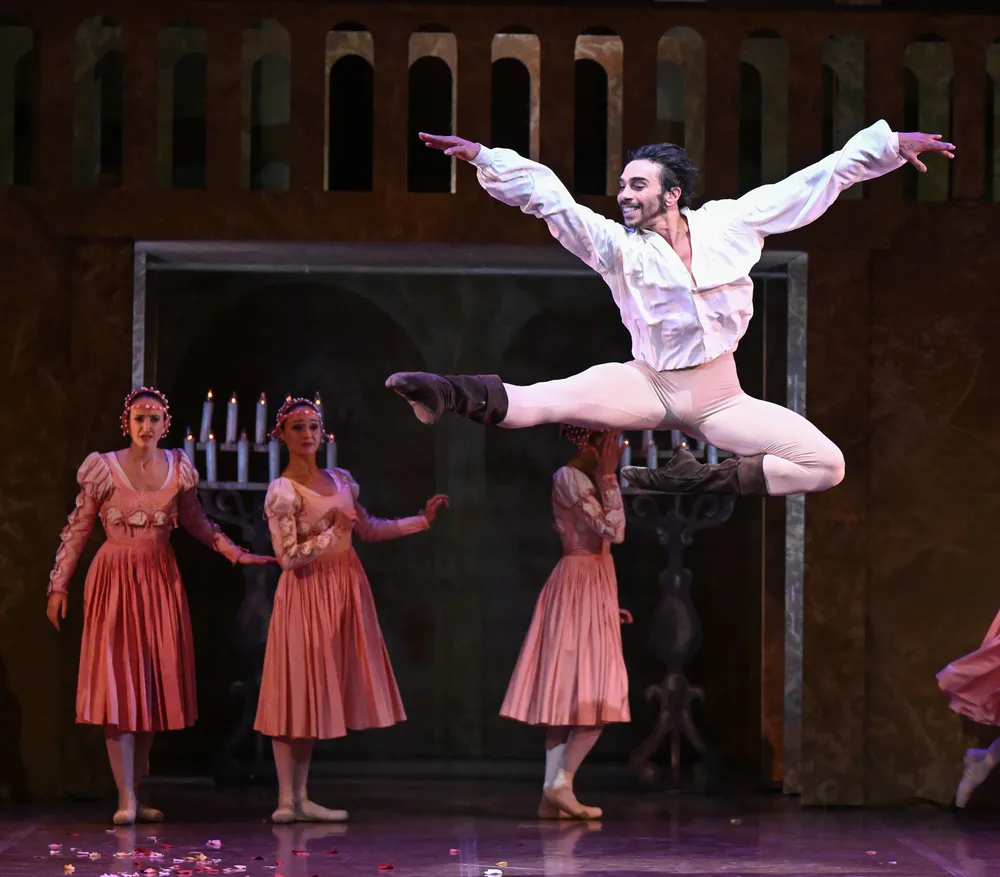
The Taming of the Shrew was created by John Cranko for the Stuttgart Ballet, first and foremost for the legendary dance partnership of Marcia Haydée and Richard Cragun in the leading roles. A master at creating characters whose inner motives are comprehensible and authentic to the audience, Cranko also devised two roles in which generations of dancers can sublimely unite their acting and dancing abilities. Katherina’s character undergoes a profound transformation over the course of the piece as she not only lets go of her defensive posture but also realizes that Petruchio loves her for who she is. The utterly endearing Petruchio is given two bravura solos that leave the audience breathless and cheering every time. With three brilliant pas de deux that are by turns hilarious, touching, and deeply human, Cranko ensures that his audience falls inevitably in love with his two main characters by the time the curtain falls.

As in many of Cranko’s ballets—and in Shakespeare’s works—there are additional characters who delight the audience and act in contrast to the two protagonists: Katherina’s pretty but vain younger sister Bianca and her three suitors: the fop Gremio, the snob Hortensio, and the young student Lucentio, who ultimately wins Bianca’s hand, only to realize that looks aren’t everything. Katherina’s and Bianca’s long-suffering father and the village priest round out the ballet’s witty humor.

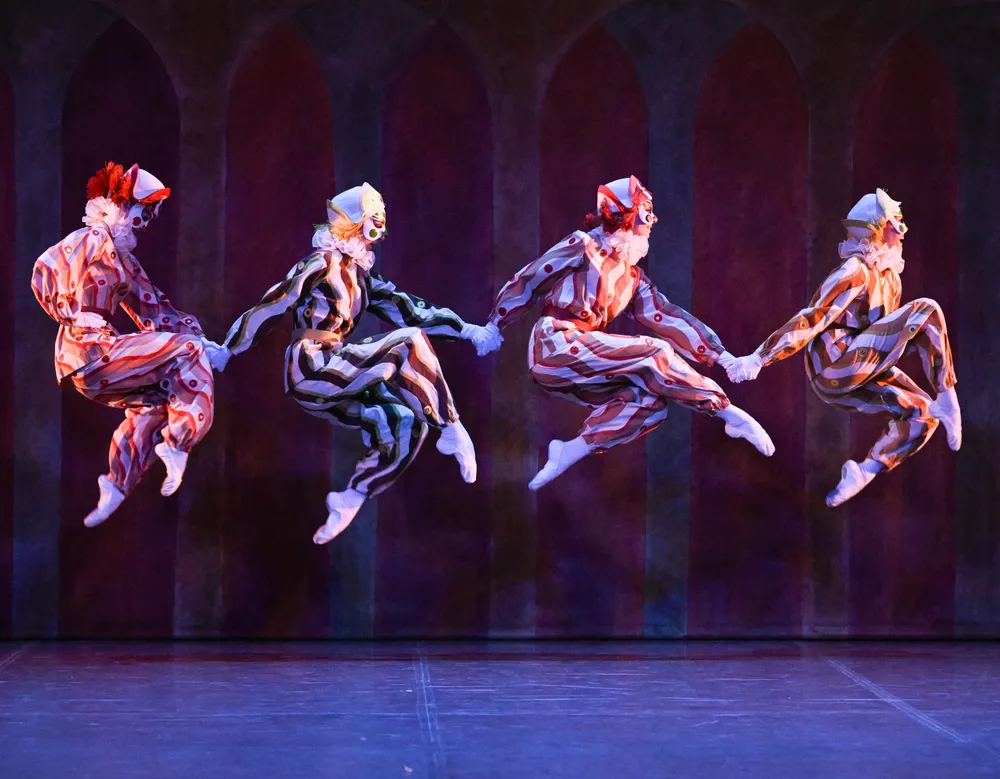
The Taming of the Shrew is a wonderful parable about what lies beneath the surface and how men and women can meet as equals when they are able to trust each other. Choreographed to the cheerful and exuberant music of Domenico Scarlatti, orchestrated by Kurt-Heinz Stolze, and outfitted with colorful costumes and charming sets by Elisabeth Dalton, The Taming of the Shrew brings to life the sun-drenched streets and gardens of Italy and is the perfect ballet for the whole family.

Dynamic ballet scene from The Taming of the Shrew - Petruchio in spectacular jumping pose
Ensemble of the Stuttgart Ballet
© Bernd Weissbrod
Ensemble scene from The Taming of the Shrew - colorful costumes in Italian Renaissance atmosphere
Jason Reilly as Petruchio, Ensemble of the Stuttgart Ballet
© Bernd Weissbrod

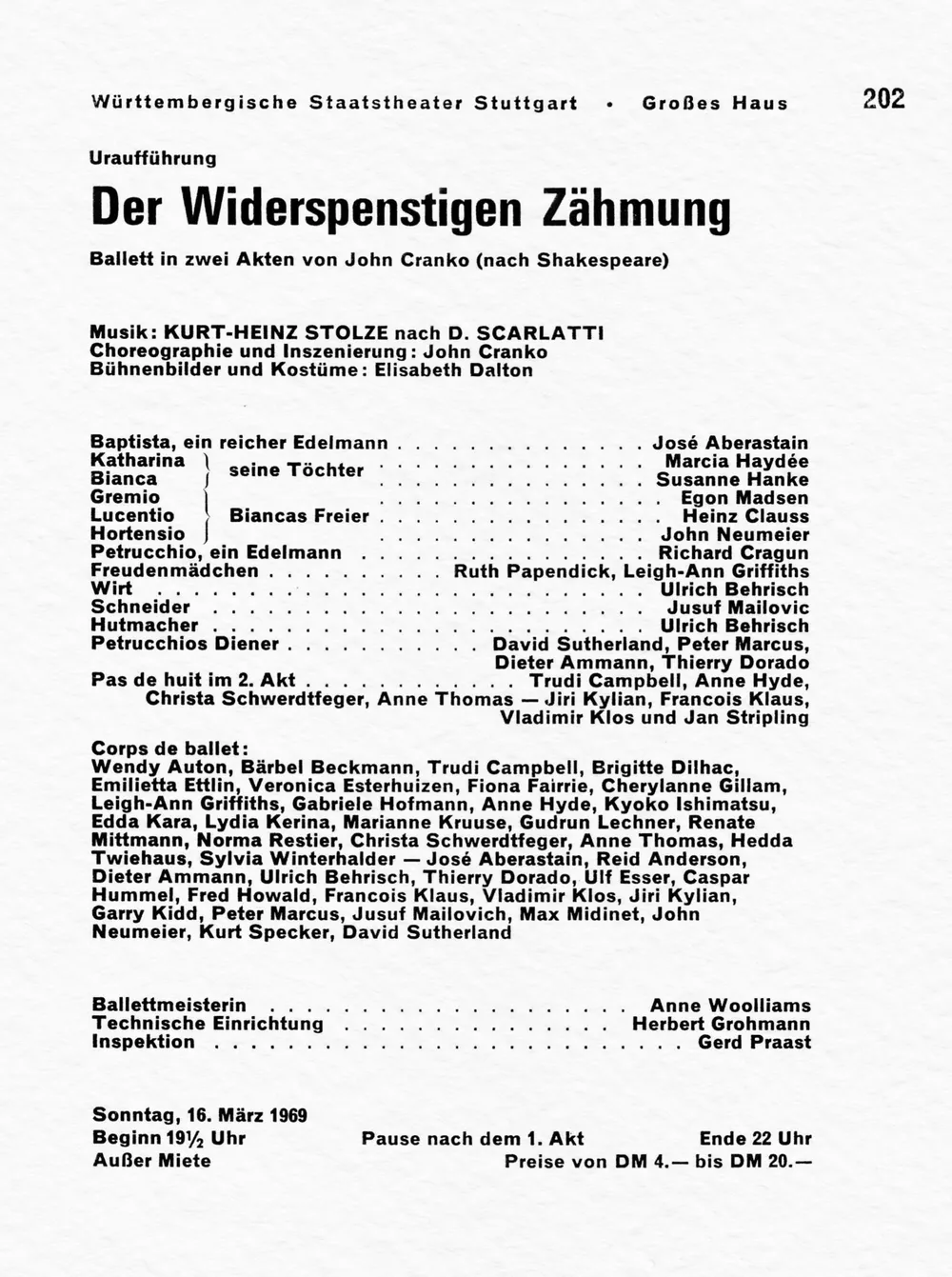
Premiere cast sheet

Original cast sheet of The Taming of the Shrew world premiere from December 2, 1962 with complete cast list

Companies that have danced John Cranko’s The Taming of the Shrew

Aalto Ballett
American Ballet Theatre
Ankara State Ballet
Australian Ballet
Badisches Staatsballett
Ballet de Santiago de Chile
Ballet de Teatro Colon, Buenos Aires
Ballet deTeatro Municipal, Rio de Janeiro
Balletto dell’Opera di Roma
Ballet dell Teatro alla Scala
Ballet du Capitol, Toulouse
Ballet du Grand Theatre de Genève
Bayerisches Staatsballett
Ballet West, Salt Lake City
Birmingham Royal Ballet
Boston Ballet
Cincinnati Ballet
Czech National Ballet
Deutsche Oper Berlin
English National Ballet
Finnish National Ballet
Hamburg Ballett
Houston Ballet
Joffrey Ballet (NY)
Korean National Ballet
Leipziger Ballett
Mexico Ballet
National Ballet of Canada
Pennsylvania Ballet
Polish National Ballet
Sadler’s Wells Royal Ballet
Semperoper Ballett, Dresden
Slovenian National Ballet - Ljubljana
South African Ballet – State Theatre Pretoria
The Royal Ballet
The Royal Swedish Ballet
Tulsa Ballet
West Australian Ballet

View the complete catalogue of works here
(Taken from the book “Cranko, Tanzvisionär,” with the kind permission of Henschel Verlag)